[memberonly level=“Group Membership for Businesses of 2-5 individuals, Student, Individual or Solo-Preneur, PoleCon Membership”] This…

Common Business Scams for New Businesses
You did it! You started your pole business, registered your LLC, and if you’re in the United States (US), that information is now public record and you’re probably getting flooded with scam mail.
In this post, we will talk about some common scams that target just about every new business owner in the US.
Do you have more common scams to add? Are you in another country where there are other common scams? We’d love to hear about it! Email us!
Email List Scams
This is a big one. People will email you saying they have an email list for sale from an event relevant to your industry. If you’re on this blog, you’ve probably seen the ones where people advertise they have an attendee list for PoleCon. The IPIA and PoleCon 100% do not sell attendee information and yes, we have contacted those companies and told them to stop. To our knowledge, no one has paid into these scams. The best thing to do when you receive these emails is report them to the FTC and block the sender. It feels a bit like whack-a-mole because once you stop one email another will pop up in its place.
How do they get your email address in the first place? If your email is listed anywhere online, then scammers can “scrape” it.
Beneficial Ownership Information (BOI) Filing Scams
In the US, businesses do need to file Beneficial Ownership Information with the Financial Crimes Enforcement Network (FinCEN). This filing is free of charge.
The Annual Records service is not a real service in the US. Because business filings in the US are public information, scammers can get your information from a variety of sources.
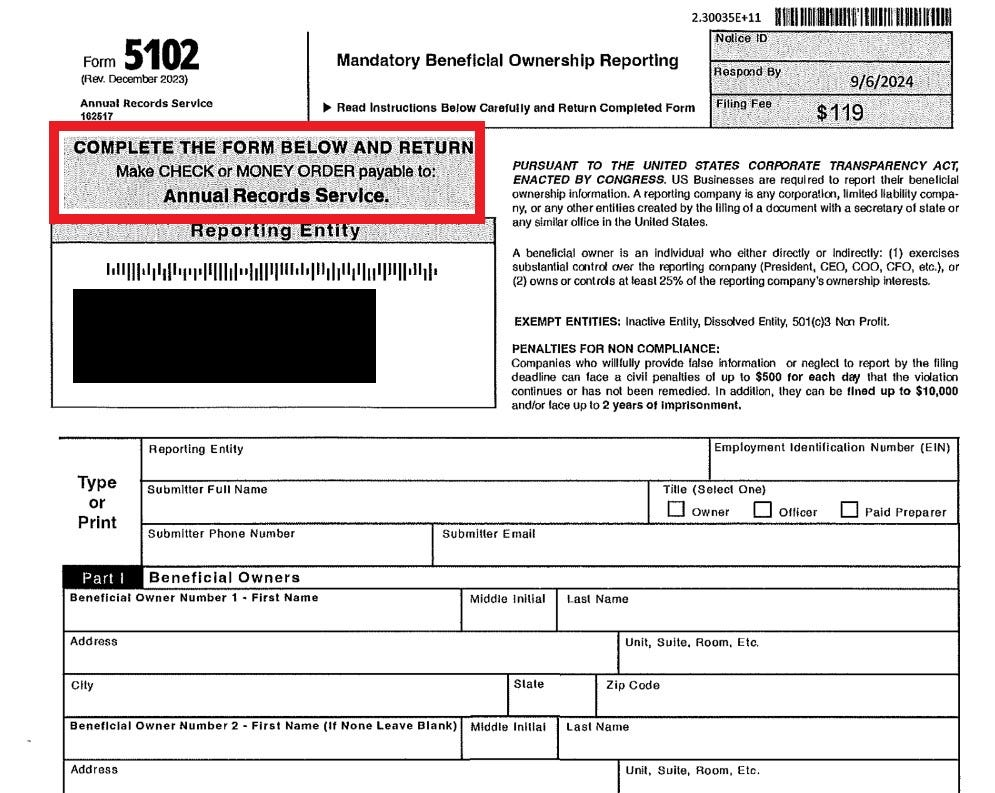
The “Annual Records Service” sends new business owners a very real looking form that has the same format as IRS forms. The form asks for a $119 filing fee with a lot of personally identifiable information (PII) and threatens fines for missing the deadline.
The form number may change from time to time, but the scam is the same, they are after your personal information. Other scams that look the same are the Business Regulation Department (also not real) or C.P.S. Form.
When it comes to government forms, double check state mandated things with your state’s Secretary of State; federally, check the IRS website; and financially check the FinCEN website.
IRS Scams
The IRS does not communicate via text, phone call, or email. The IRS will send you paper mail if you owe them money or if you are being audited. These communications usually have a reasonable deadline for you to get finances together and they tell you exactly what they are for (maybe underpayment of estimated tax, late filing, etc. but the communication will always tell you). Don’t fall for someone calling you!
Spoofed Emails Scams
Emails that look like they are coming from a legitimate source or a known person may, in fact, be phishing emails. Always double check the email address of the sender. If something feels off, contact the supposed sender through other means like a DM.
Always check email links to make sure they are going to the right place. Hyperlinks can contain malware and infect your computer, which risks more than just your business email. For more on data privacy and security check out our webinar with Circus Cora here.
General Info
Anything with a high pressure deadline is likely to be a scam. Scammers feed on your fear and hope you will blindly hand over your money and/or more personal information to them for fear of high financial repercussions.
Being a business owner is tough! There’s a lot of legitimate business filings to remember on the federal, state, and potentially local level. The Federal Trade Commission has a number of publications for business owners on scams that may target them. You can find the list of publications here. The brochures are available for free, or you can read the PDF and save some trees. Stay vigilant and if you’ve got questions, you can always ask us!
You may also like